European Union-Funded SUCCESS Project Strengthens EU–Latin America Collaboration in Software Engineering Education
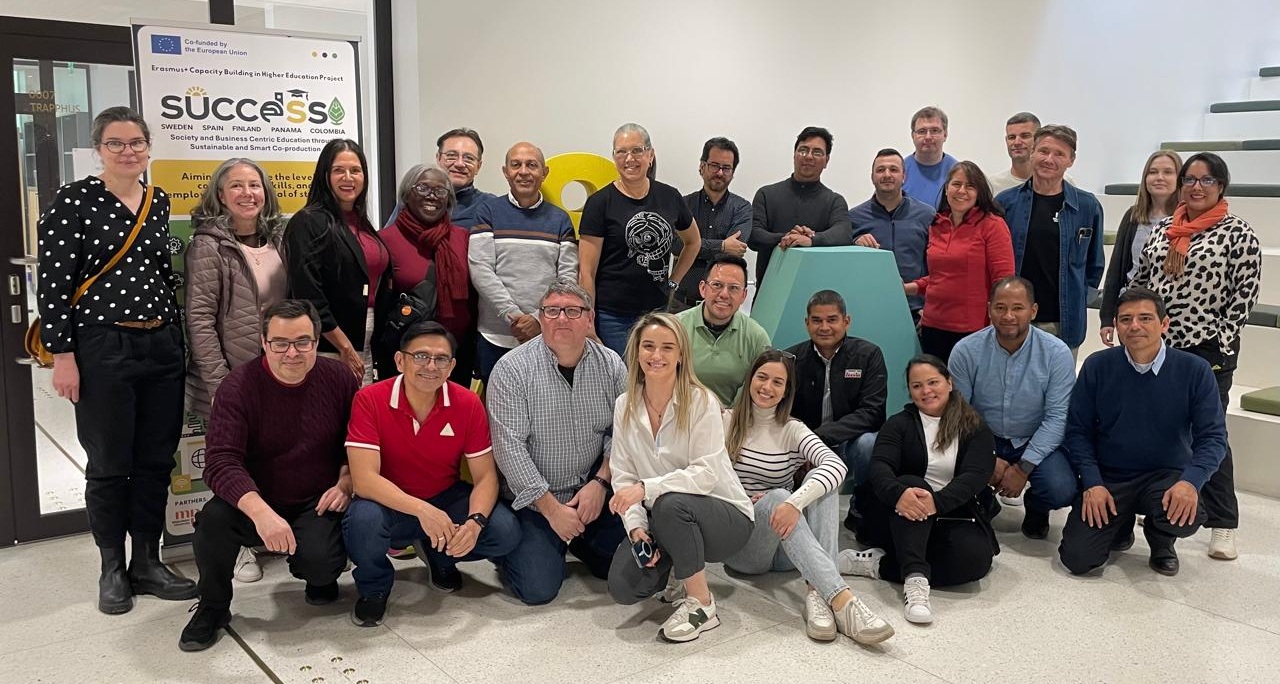
Universities from Europe and Latin America are participating in the second in-person consortium meeting of the SUCCESS project (Society and Business Centric Education through Sustainable and Smart Co-production), an initiative funded by the European Union through the Erasmus+ Capacity Building for Higher Education (CBHE) Program. The project, launched approximately one year ago, aims to enhance higher education by strengthening collaboration between academia, industry, and society.
The meeting, held across Sweden and Finland starting March 18, 2026, brings together academic and industry partners to review the progress achieved during the first year and to plan the next phase of implementation.
The SUCCESS project is coordinated by Mälardalen University (Sweden) and focuses on building sustainable co-production capabilities between higher education institutions and the IT sector. The project promotes innovative educational approaches, including curriculum modernization, lifelong learning (LLL), and the integration of real-world industry challenges into academic environments.
The European consortium also includes Åbo Akademi University (Finland) and the University of Castilla-La Mancha (Spain), which contribute extensive experience in industry-academia collaboration, co-creation models, and continuous professional development.
From Latin America, the project brings together four universities: the Universidad Tecnológica de Panamá (UTP) and the Universidad de Panamá (UP), as well as Colombia’s Universidad de Antioquia (UdeA) and Universidad del Cauca (UNICAUCA). These institutions are working collaboratively to address the gap between higher education and labor market needs, particularly in the field of information technologies.
During this meeting, participants are discussing key topics that guide the implementation of the project, including project management and coordination, monitoring of progress across work packages, and the evaluation of first-year results. Special attention is being given to the analysis of survey data from students and industry stakeholders, which informs the design and improvement of training programs, aligned with current and future workforce demands.
In addition, discussions focus on the development of lifelong learning offerings, curriculum updates, competency-based education, and the strengthening of collaboration with industry partners. The consortium is also advancing initiatives related to innovation in STEM education and the creation of flexible and inclusive learning pathways.
The project further emphasizes the establishment of co-production hubs and smart learning environments, fostering closer collaboration between academia and industry and enabling hands-on, real-world learning experiences for students and professionals.
By supporting initiatives like SUCCESS, the European Union reinforces its commitment to international cooperation, capacity building, and the modernization of higher education systems. The project contributes to the development of a more connected, skilled, and innovative-driven global workforce.
The SUCCESS project represents a significant step toward establishing sustainable ecosystems of collaboration between academia, industry, and society, generating long-term impact across Europe and Latin America.